
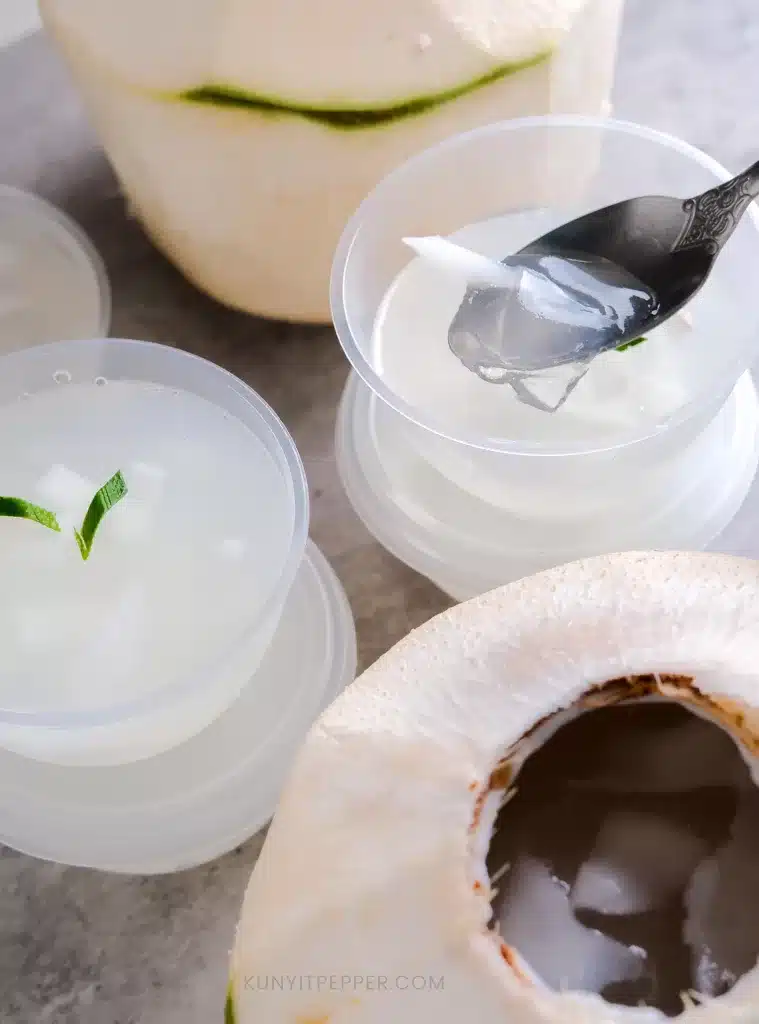
In the tropical heat of Southeast Asia, a cold coconut jelly agar-agar is always a perfect refreshing dessert to have on a hot scorching day. It’s lightly sweet with a fresh coconut water taste, and the fact that this cold jelly melts in the mouth really soothes the throat.
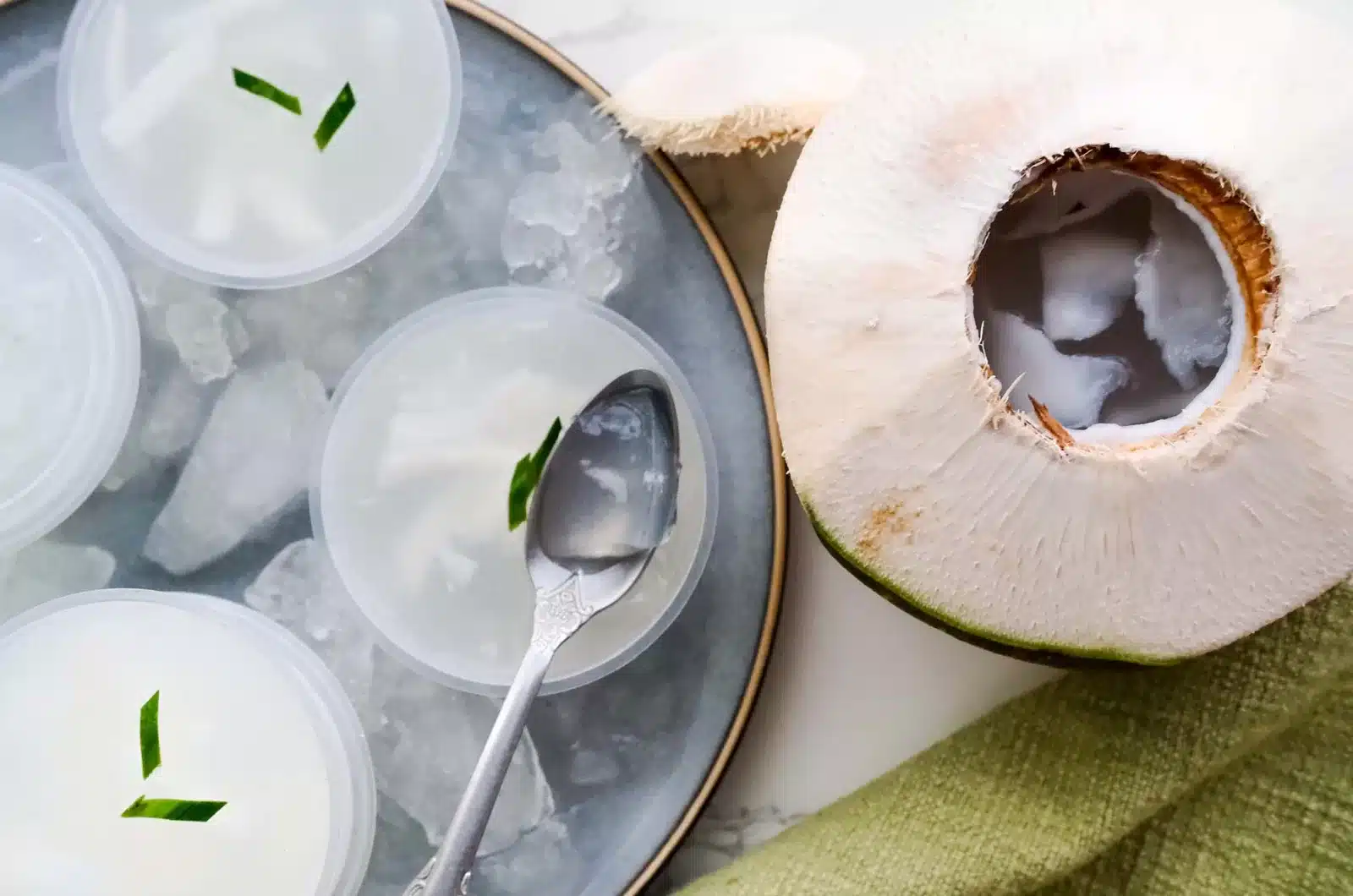
If you’ve ever been to Thailand, Malaysia, or Singapore, you may have come across this fresh coconut water agar-agar jelly, served in a simple plastic cup or in a coconut itself. When I was little, it was sold alongside roadside coconut water stalls, though not all of it. These days, it’s much easier to find in supermarkets, fruit stalls, and some local restaurants.
Table of Contents
- What to expect from this coconut jelly agar-agar
- What is agar-agar?
- What Makes This Coconut Jelly a Light and Natural Dessert Option?
- Ingredients to make clear coconut jelly agar agar
- How to make coconut jelly agar-agar recipe
- FAQ
- Other natural, cold, and refreshing recipes you might like
- Other Southeast Asian recipes with pandan
What to expect from this coconut jelly agar-agar
Texture
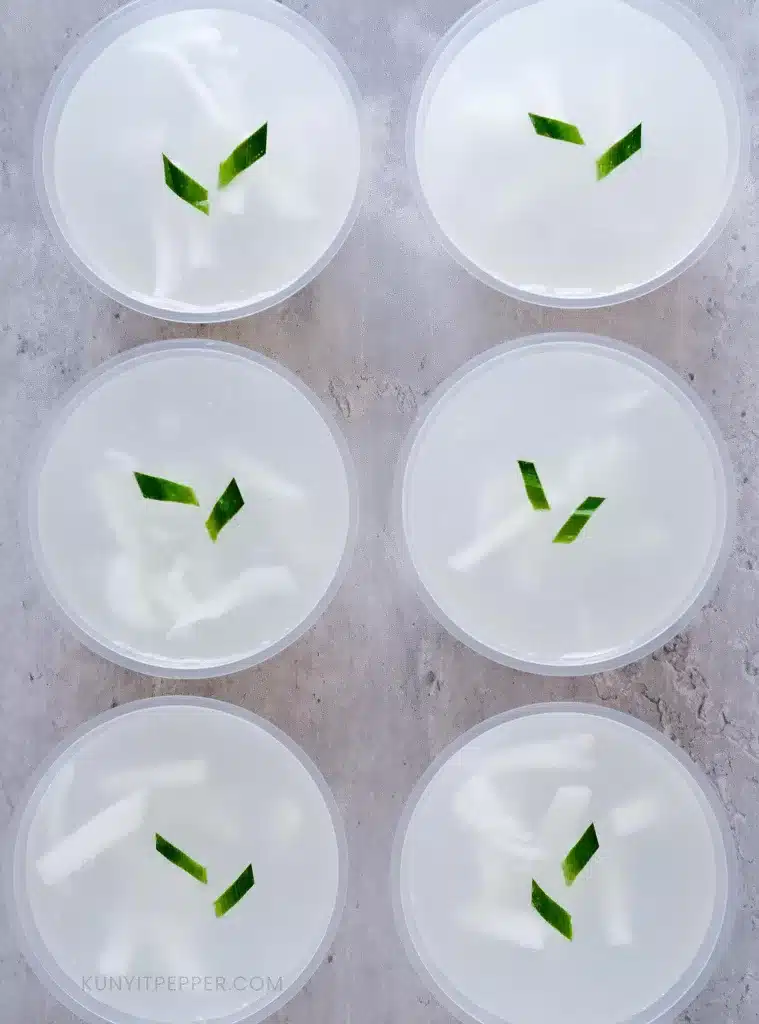
While you might’ve seen cubed or cut versions of coconut jelly, this clear coconut jelly is silky soft, it melts in your mouth effortlessly. That’s why it’s usually served in a container (or coconut) to help hold its shape.
Taste
Infused with pandan leaf, lightly sweetened with sugar and seasoned with a pinch of salt, this coconut jelly recipe enhances the natural flavor of coconut water in a soft jelly form without being overly sweet.
Whether you’re using agar-agar powder or strips, you will find below how you can make clear coconut jelly easily while preserving the nutrients in coconut water.
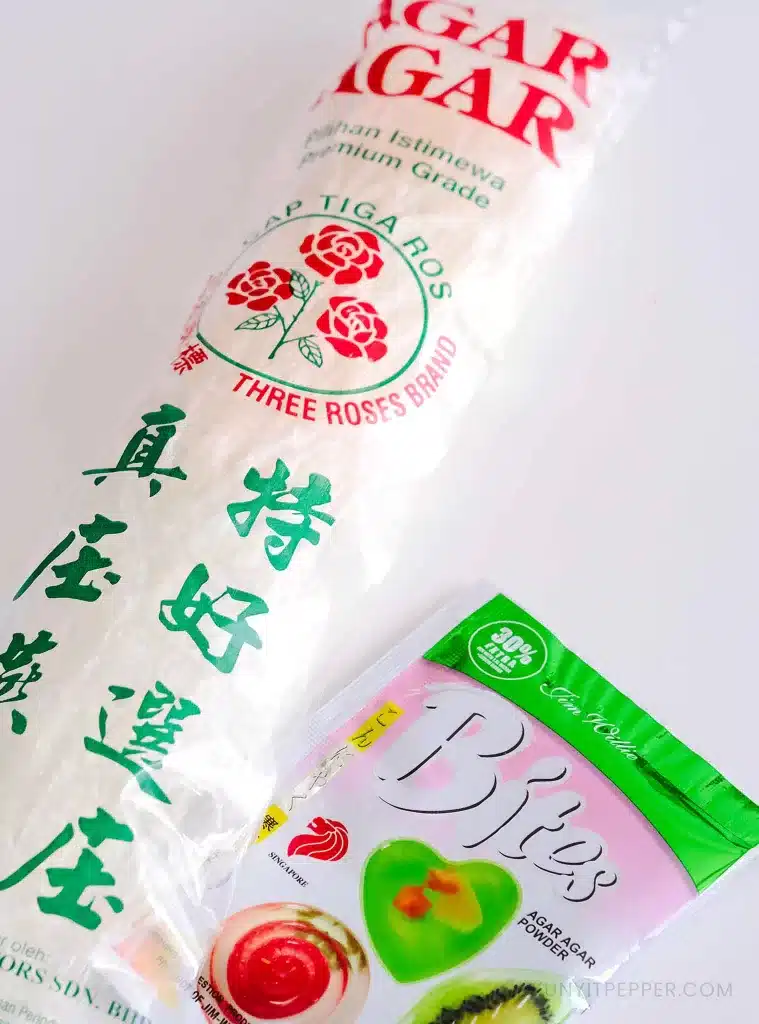
What is agar-agar?
Agar-agar is a Malay term for jelly. It’s a thickening and gelling agent made of red seaweed or algae. Originally derived from Japan, agar-agar is a plant-based gelatin commonly used in Asian cuisine. It is also known as a vegan gelatin substitute.
There are 2 versions of agar-agar, powder and strips, and you can find them on Amazon – Agar-agar powder
What Makes This Coconut Jelly a Light and Natural Dessert Option?
This clear coconut jelly agar-agar recipe is made mostly with fresh coconut water (75%).
Fresh coconut water is naturally refreshing and contains nutrients and antioxidants. Thanks to electrolytes (sodium, potassium, and magnesium) coconut water can be a refreshing way to top up water in your body.
🥥 Coconut Water Quick Facts (1 cup)
- Carbs: 15 grams
- Sugar: 8 grams
- Calcium: 4% of the daily value (DV)
- Magnesium: 4% of the DV
- Phosphorus: 2% of the DV
- Potassium: 15% of the DV
Source USDA
- Unlike coconut milk, coconut water is naturally low in calories and almost fat-free. It also contains caffeic acid, which is shown to have antioxidant properties.
- Some studies suggest coconut water may lower blood sugar levels, may help prevent kidney stones, and may support heart health. Note: These studies were conducted on animals, so while the results are promising, more research is needed in humans
- Made with agar-agar – a plant-based gelatine that’s low in calories, fat, and carbs, this coconut jelly is a light dessert. It’s vegan, gluten-free, and can even be made sugar-free if you like!
- Lightly infused with pandan, a fragrant leaf traditionally used in Southeast Asian cooking and ancient remedies, this coconut water agar-agar isn’t just aromatic, it may also have anti-inflammatory properties.
- Compared to most commercial jellies packed with artificial flavors and colors, this coconut jelly is a healthier option if you’re looking for a naturally light, refreshing, and soothing dessert.
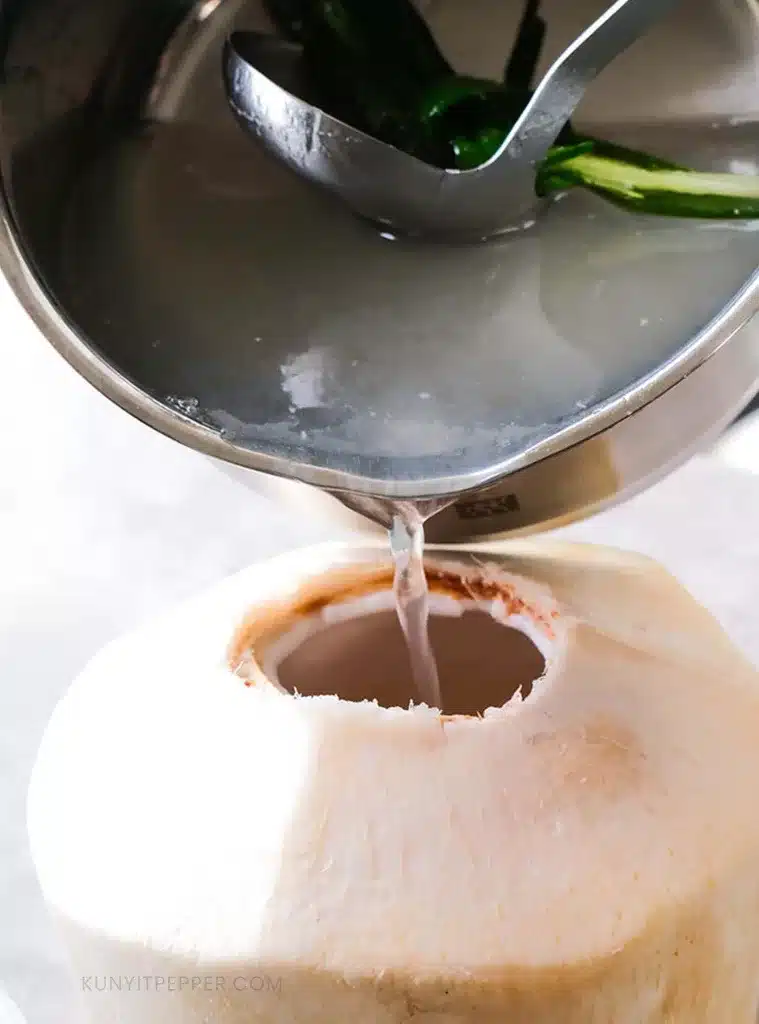
Ingredients to make clear coconut jelly agar agar
- Fresh coconut water (unsweetened) – I use fresh coconut water from the stall. If you’re getting one from the grocery store, make sure it’s unsweetened. If it comes with added sugar, you can skip the sugar in this recipe or adjust the amount when cooking.
- Pandan leaf – The combination of coconut and pandan makes an irresistible aroma, which very much defines Southeast Asian dessert flavor. If you like it authentic, do not skip it unless you can’t find it. You will only need 1 pandan leaf, or substitute it with 1/2 tsp of pandan extract (the most natural you can get).
- Agar-agar is the main ingredient that solidifies the coconut water into the jelly I mentioned above. You can get it from asian markets or Amazon. Whether you choose agar-agar powder or strips, make sure it’s unflavored and no food coloring.
- Water will be used to dissolve the agar-agar during cooking so do not skip it. Agar-agar (both powder and strips) needs to be boiled. Using water instead of coconut water helps retain more of its nutrients.
- Sugar is traditionally included in both commercial and homemade coconut jelly. If you prefer the natural sweetness of coconut water, you may reduce or skip it.
- Salt (optional): Just a pinch to lift up the coconut water flavor. You can also skip it.
How to make coconut jelly agar-agar recipe
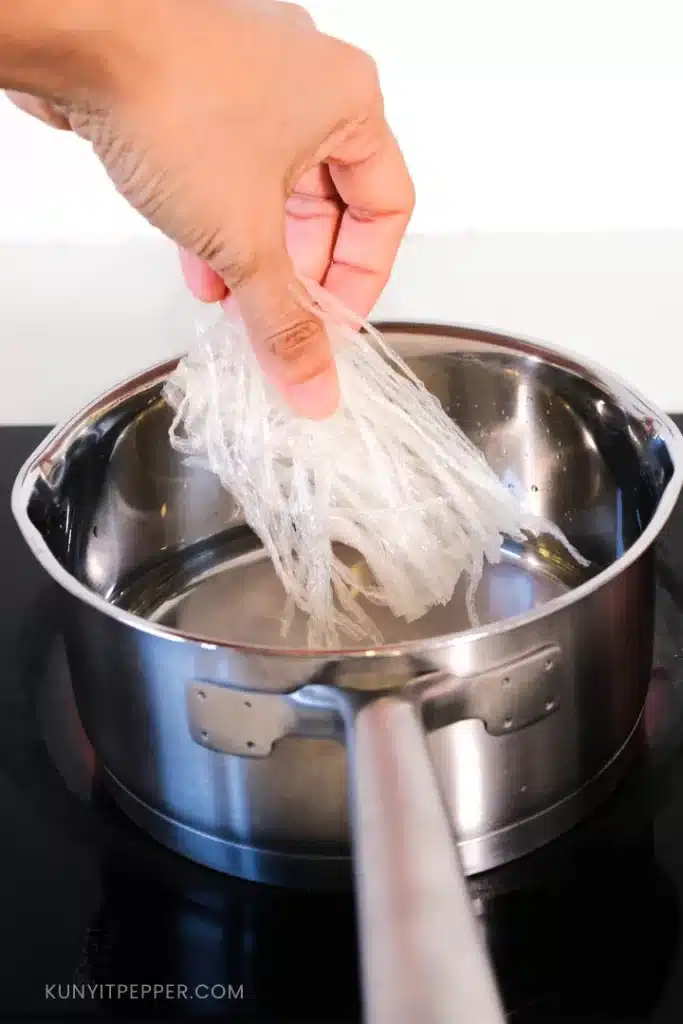
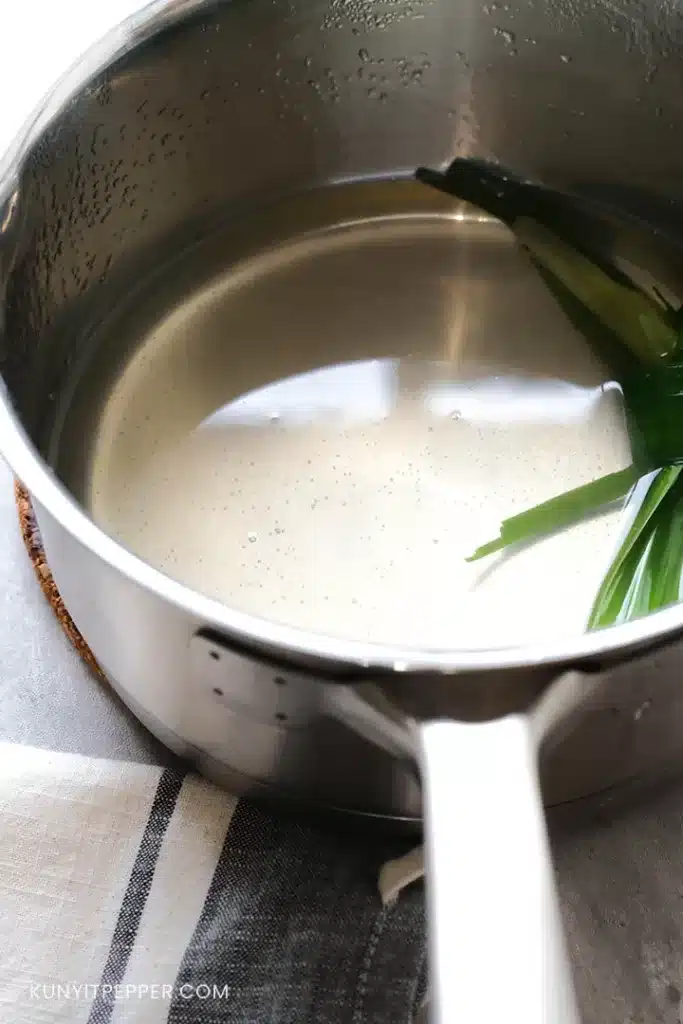
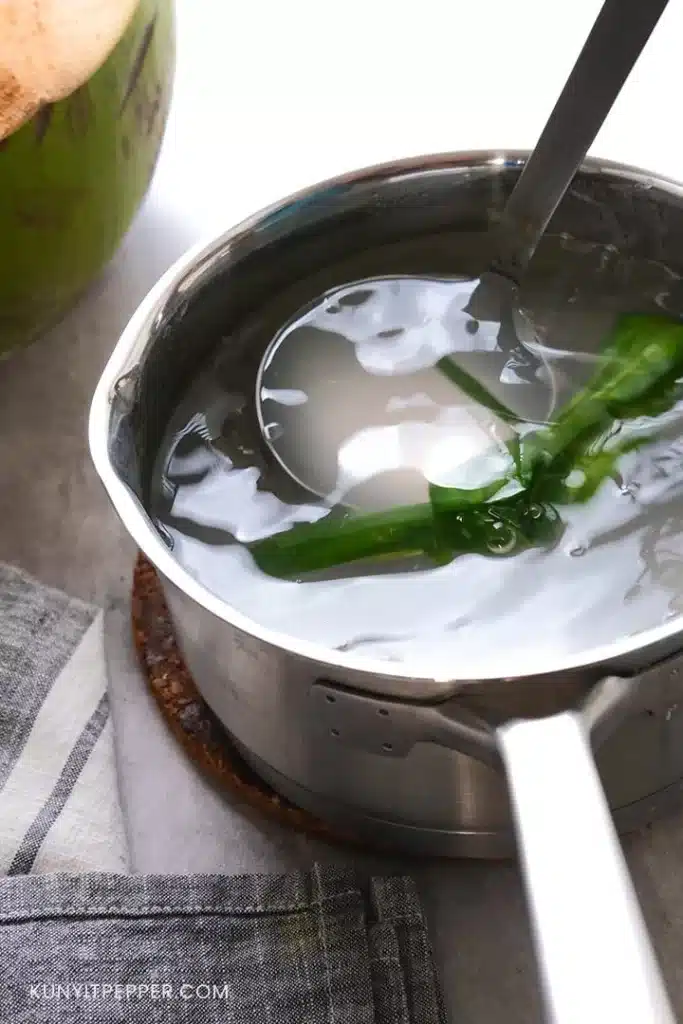
(Dissolving the agar-agar with water is important to avoid heating the coconut water, which reduces its nutrient content.)
FAQ
What is the ratio of agar-agar to liquid when making coconut jelly?
For a soft coconut jelly, I find that a ratio of 4g (2 tsp) of agar-agar powder to 1000 mL of liquid (coconut water + water) works best. For a firmer texture, use 6g of agar-agar to 1000 mL of liquid.
How long can coconut jelly last in the fridge?
Coconut jelly can stay up to 1 week in the fridge.
What is coconut jelly good for?
Coconut jelly (especially the clear ones) contains nutrients that help you stay hydrated. Minerals like sodium, potassium, and magnesium in coconut water help balance water in your body, which is important for overall health. Cold coconut jelly is a refreshing way to quench your thirst while getting some antioxidants.
Is agar agar the same as jelly?
Yes, agar-agar is the Malay term for jelly. Agar or agar-agar is a gelling and thickening agent derived from red seaweed or algae. Originally from Japan, this plant-based gelatin has been widely used in Southeast Asia, especially in Malaysia, for its ability to withstand hot weather.
Other natural, cold, and refreshing recipes you might like


Other Southeast Asian recipes with pandan
Clear Coconut Jelly Recipe with Agar-Agar
Authentic Southeast Asian coconut jelly (agar-agar) recipe made to retain the nutrients. Smooth, soothing, and refreshing, this clear coconut jelly is mildly sweetened and infused with pandan.
2-4
Serving8
minutes320
kcal4
hoursIngredients
800 ml Coconut Water, unsweetened (3 cups) – If buying fresh ones with meat, strain them and cut the meat into smaller pieces.
1 cup Water
5 g Agar-agar strips / 2 tsp agar agar powder /(unflavored and colorless)
3 tbsp Sugar – (Omit or reduce if you like it naturally sweet)
1 pinch Salt – (Optional)
1 piece Pandan leaf – (tie it in a knot)
Directions
- Scroll up to see the step-by-step photos.
- In a saucepan or pot, mix water, agar-agar powder or strips, pandan leaf, sugar, and salt. If using agar-agar powder, stir to break up any clumps. Bring to a boil over medium heat, stirring constantly with a ladle.
- Once the agar-agar powder is fully dissolved and no longer visible, turn off the heat and move the pot away from the stove to stop cooking.
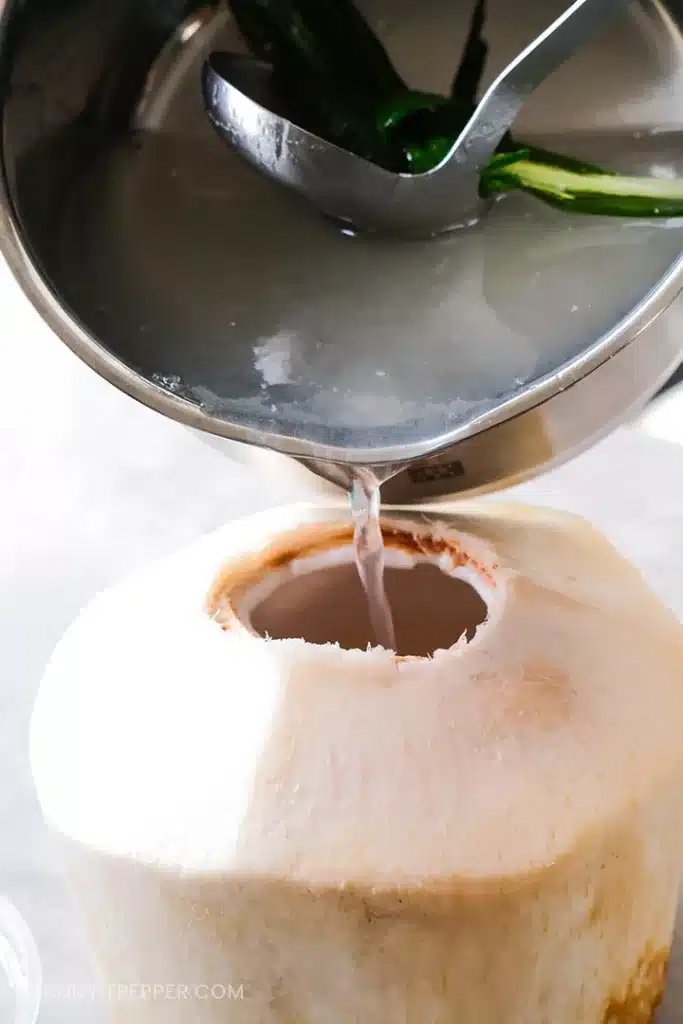
- Add coconut water to the pot and stir while mixing. At this point, you can discard the pandan leaf.
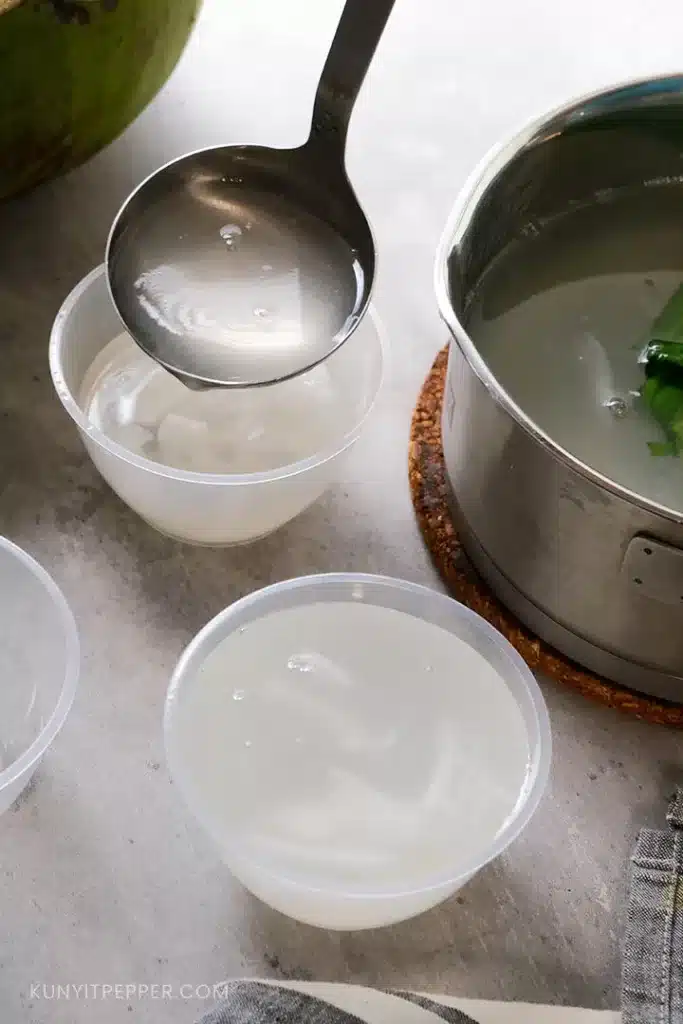
- Pour the mixture into individual containers or back into the coconut shells from which the water was extracted.
If using small containers, cut the coconut meat into thin strips, add them to the containers, then pour in the mixture. - Cover the containers or coconut shells and chill in the refrigerator for at least 4 hours.
Notes
- Once you mix the coconut water and agar-agar water, immediately pour them into containers or back into the coconut shell. Agar-agar thickens quite quickly at room or cold temperatures.
Nutrition Facts
- Serving Size: 250
- Total number of serves: 4
- Calories: 80kcal
- Fat: 0g
- Saturated Fat: 0g
- Trans Fat: 0g
- Polyunsaturated Fat: 0g
- Monounsaturated Fat: 0g
- Cholesterol: 0mg
- Sodium: 120mg
- Potassium: 310mg
- Carbohydrates: 19g
- Fiber: 1g
- Sugar: 16g
- Protein: 0g
- Vitamin A: 0IU
- Vitamin C: 18mg
- Calcium: 30mg
- Iron: 4mg
- Vitamin D: 0mg
- Vitamin E: 0mg
- Vitamin K: 0mg
- Thiamin: 0.1mg
- Riboflavin: 0mg
- Niacin: 0mg
- Vitamin B6: 0mg
- Vitamin B12: 0mg
- Folate: 0mg
- Biotin: 0mg
- Pantothenic Acid: 0mg
- Phosphorus: 10mg
- Iodine: 0mg
- Magnesium: 10mg
- Zinc: 0mg
- Selenium: 0mg
- Copper: 0.02mg
- Manganese: 0.4mg
- Chromium: 0mg
- Molybdenum: 0mg
- Chloride: 0mg