

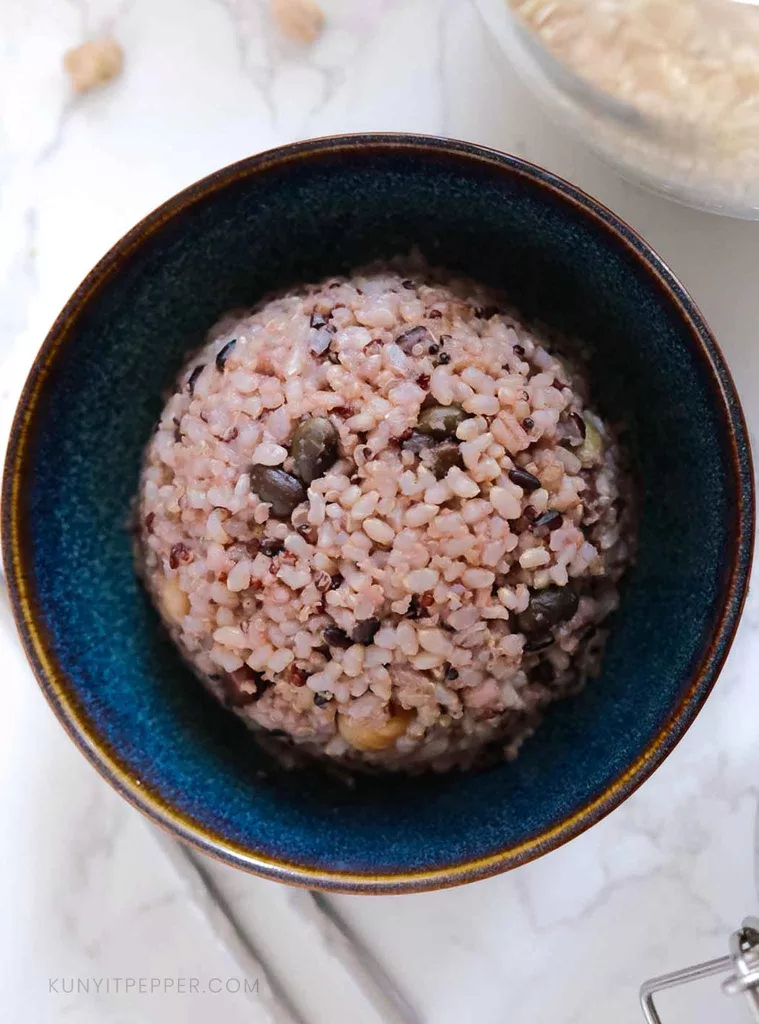
What is Japgokbap?
Japgokbap is a traditional Korean multigrain rice dish made with;
- Rice
- Wholegrains
- Legumes
Cooked together in one pot, this plant-based mix of grains and legumes is commonly enjoyed as a nourishing base alongside banchan and main dishes.
As someone who follows a healthy Asian diet focused on real ingredients rich in antioxidants, I love how varied traditional Korean food is. It makes even simple everyday dishes feel more nourishing.
This multigrain rice combination is rich in fibre, protein, and polyphenols, which help keep me full for longer with just a small portion and feel easier on my digestion. Plus, you get a variety of whole grains and legumes in one bowl of rice!
Table of Contents
- What is Japgokbap?
- About this Korean Multigrain Rice Recipe in a Rice Cooker
- Important Notes Before You Make It
- Why This Korean Multigrain Rice is My Choice of Healthier Rice
- Key Ingredients (with & substitutions)
- How to Cook Multigrain Rice in a Rice Cooker
- How to Cook Korean Multigrain Rice Without Soaking the Legumes Overnight
- Soak and Freeze Korean Multigrain Rice Ingredients
- How to Store Leftover Multigrain Rice – For easy reheating every time!
- Reheating guide while retaining moisture
- Why soak legumes?
- Tips & important notes
- FAQs
- Other Multigrain Rice Recipes You Might Like
- Sweet Grains Recipe To Try
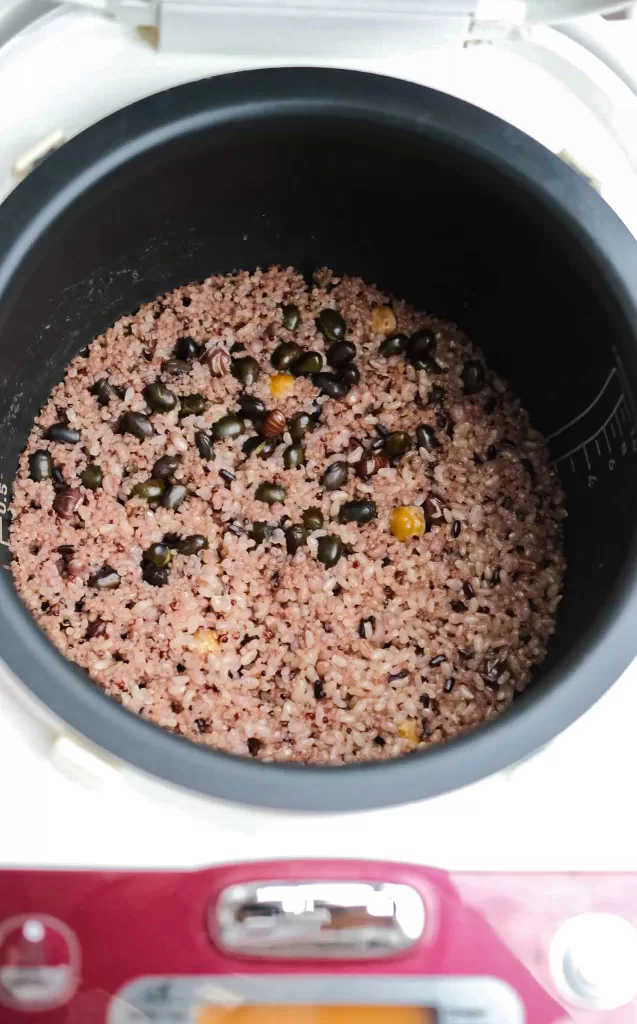
About this Korean Multigrain Rice Recipe in a Rice Cooker
This recipe combines eight whole grains and legumes:
- Short-grain brown rice
- Black rice
- Barley
- Millet
- Quinoa Adzuki beans (small ones)
- Black beans
- Chickpeas.
I mix them in a 2:1:1 ratio of rice, grains, and legumes, for a hearty, well-balanced, and high-fiber mix. Make sure to follow the instructions precisely, using the correct ingredients, to make perfect, fluffy multigrain rice every time!
Important Notes Before You Make It
Soaking legumes and grains is a must. Especially with dried ingredients, some may require overnight, but fret not, you’ll have the option to;
✔️ Make this Korean multigrain rice the same day using a rice cooker. See below
✔️ Pre-soak and freeze the ingredients so you can cook them fresh every time without soaking. See below
You can use either the basic rice-cooker function or multicooking mode.
Why This Korean Multigrain Rice is My Choice of Healthier Rice
A quick note: I’m not a nutritionist or dietitian. The information shared here is based on publicly available research and nutrition references for general informational purposes. Everyone’s needs are different, so take these as general insights rather than medical advice.
1. Variety of plant-based ingredients in one serving.
Eating a wide variety of plant-based foods is associated with:
- Better digestion and gut balance (1)
- More mindful cholesterol management
- Supporting heart health (2)
- Steadier blood sugar levels (3)
- Helping the body manage everyday inflammation (4)
2. A nourishing carbohydrate option
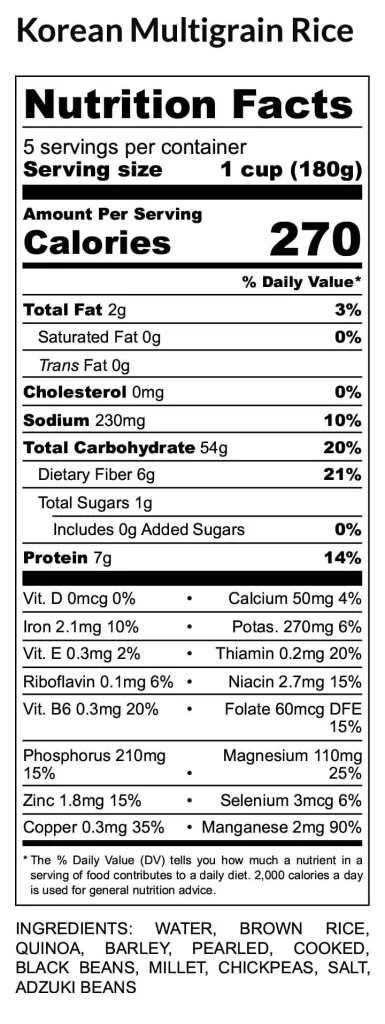
Korean multigrain rice is naturally rich in fibre, protein, antioxidants, and minerals.1 bowl of Korean multigrain rice contains:
3. Naturally rich in antioxidant compounds.
Whole grains and legumes contain naturally occurring antioxidants (5,6), including polyphenols such as flavonoids and anthocyanins, phenolic acids, and small amounts of vitamin E.
These compounds are widely studied for their role in helping the body manage everyday oxidative stress from poor sleep, environmental exposure, or damaging lifestyle habits.
Some research has shown that diets rich in these compounds may be associated with a lower risk of long-term chronic conditions (7).
4. Slower-digesting than refined grains – Low GI
Because japgokbap contains fibre and protein from whole grains and legumes, it generally digests more slowly than refined carbohydrates like white rice or white bread. This slower digestion is why multigrain rice is often described as having a lower glycaemic index than refined grains (8, 9).
According to Harvard Health Publishing, replacing refined grains with whole grains and including at least two servings of whole grains daily is associated with a reduced risk of type 2 diabetes (10)
5. Packed with gut-friendly ingredients
Some of the grains and legumes used in japgokbap, such as barley and beans, contain prebiotic fibres (11). These fibres help support a diverse gut microbiome and regular digestion, which plays a role in overall health (12).
Key Ingredients (with & substitutions)
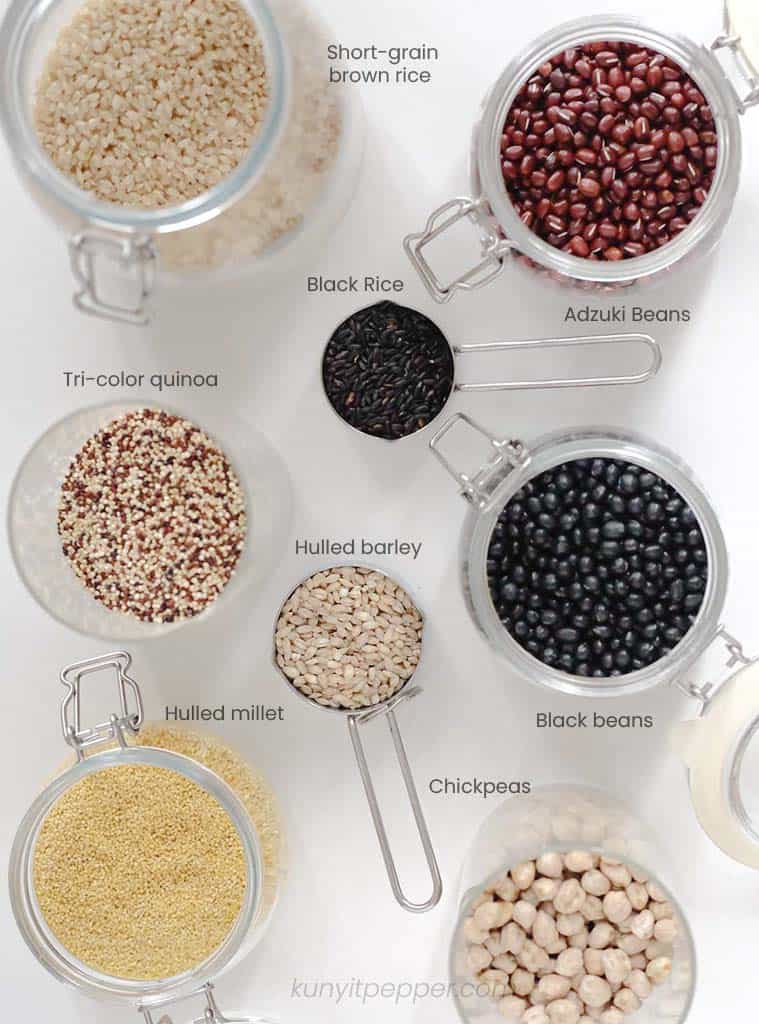
WHOLE GRAINS
- Short-grain brown rice – You can also opt for short-grain white rice, which is used in sushi.
- Black rice (also called forbidden rice) – This rice makes the rice purple most Korean purple rice. You’ll need only a small amount.
- Quinoa – I use a tri-color option for antioxidants and fiber content. I understand that black quinoa can taste bitter to some, so feel free to use regular quinoa.
- Barley – If you are gluten intolerant, consider skipping this ingredient or replacing it with amaranth or oats.
- Millet – I use foxtail millet. Another millet commonly used in Korean multigrain rice is proso millet.
LEGUMES (Dried)
- Chickpeas – I use dried chickpeas in this recipe
- Black Beans – You can also use black soybeans!
- Adzuki Beans – These small red beans are often confused with kidney beans, which are larger and take much longer to cook. Avoid using kidney beans as they won’t cook at the same time as the other ingredients in this recipe.
SEASONING
- Salt
How to Cook Multigrain Rice in a Rice Cooker
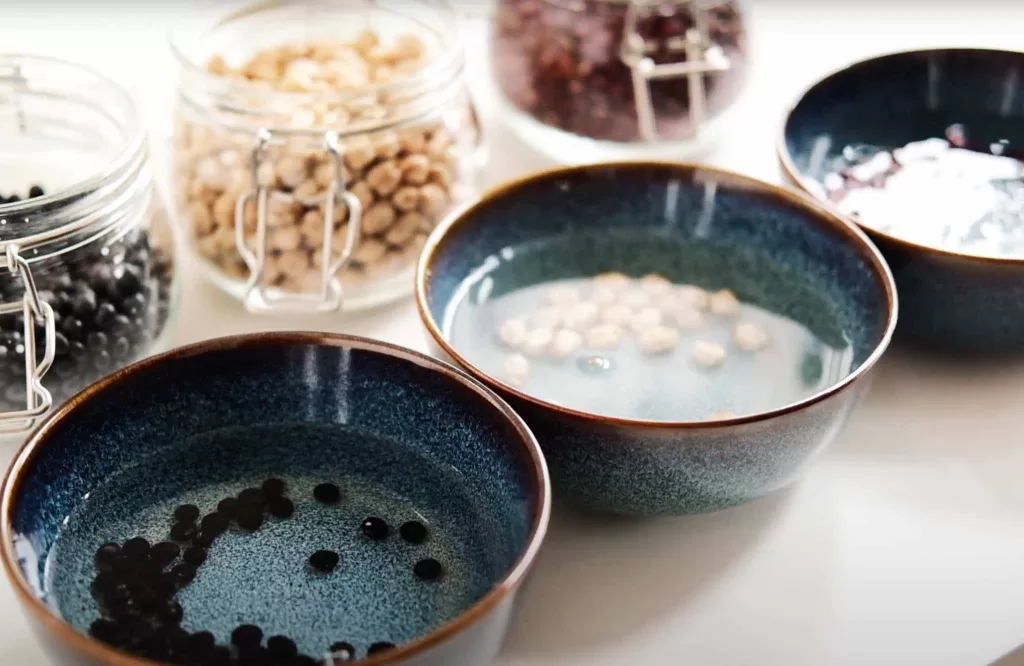
Step 1. Soaking the legumes
Soak the small adzuki beans, black peas, and chickpeas in a bowl of water overnight or at least 12 hours. If you wish to skip long soaking, I share below How To Cook Korean Multigrain Rice Without Soaking the Legumes Overnight.
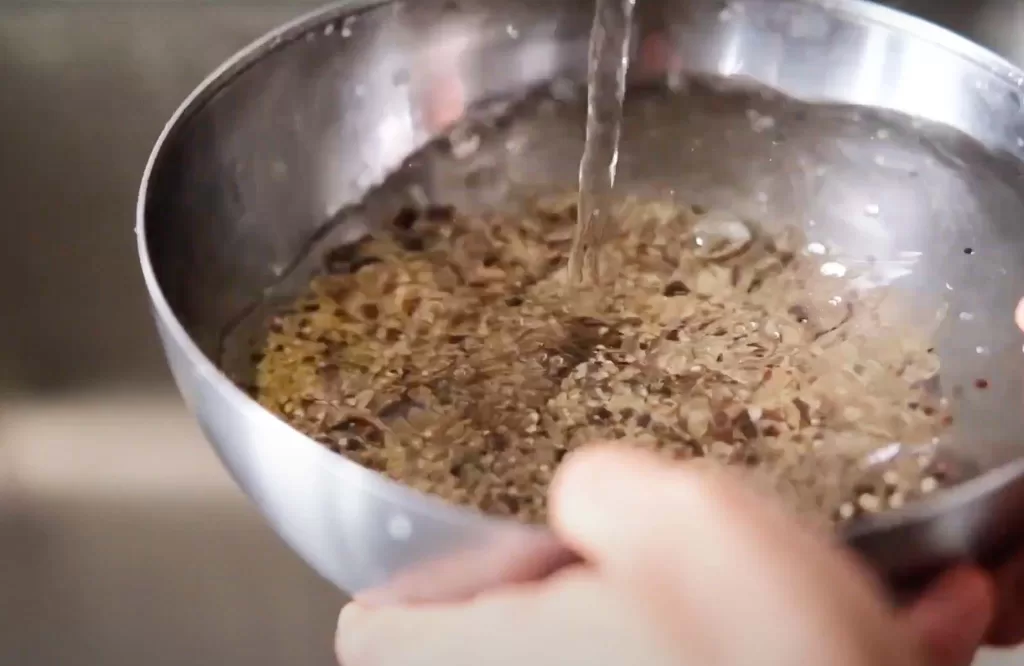
Step 2. Rinse and soak the whole grains (1 hour)
1 hour before cooking, mix the grains and rice in a bowl. Rinse them until the water runs clear, and leave them to soak for an hour. Brown rice and black rice take longer to cook and require more water, so don’t skip this part.
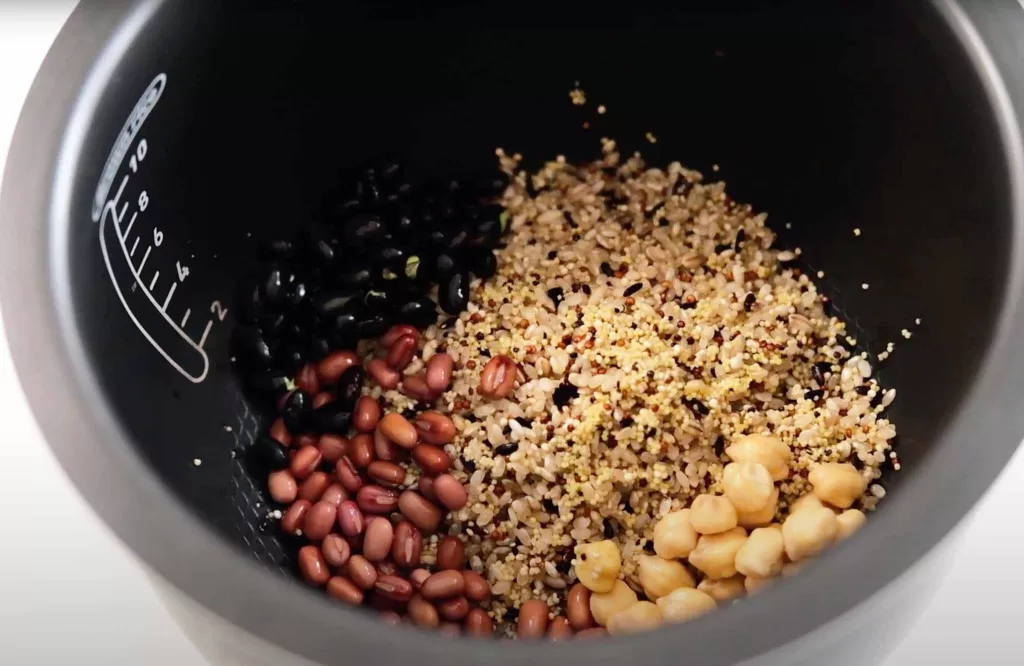
Step 3. Combine the soaked legumes, whole grains, and rice in a rice cooker pot.
Drain the water from the mixed grains and beans, rinse them through a fine mesh strainer, and transfer them to the rice cooker pot. Add water and salt, and it’s ready to cook.
You can use a manual setting and set it to cook for 1 hour, or use the brown rice setting, if you have (I use this setting). If you only have a regular rice setting, consider cooking 2 times.
How to Cook Korean Multigrain Rice Without Soaking the Legumes Overnight
If the thought of soaking beans overnight bothers you, there are a couple of ways to cook them faster.
- Use canned beans and chickpeas. You can use kidney beans in this recipe if you use canned beans. Just start from step 2 and reduce the water by 1 cup when you add it to the pot.
- Pressure cook the beans and chickpeas in an Instant Pot. Before you start step 2, set the beans and chickpeas to Pressure Cook on High for 25 minutes (without soaking) and 15 minutes (if soaking for 4h). Remember to reduce the water by 1 cup when cooking, mixing the cooked legumes in a rice cooker.
Soak and Freeze Korean Multigrain Rice Ingredients
This way, you can cook them fresh anytime without soaking them beforehand.
- Soak the legumes overnight or at least for 12 hours.
- Once the legumes are soaked and doubled, combine rice and grains, rinse, and soak for 1 hour.
- Strain all the legumes and grains to drain the water.
- Combine all ingredients in a big bowl, and divide evenly into 2 portions.
- Transfer them into ziplock bags or containers and freeze.
When you’re ready to cook the presoaked multigrain rice;
- Take it out of the freezer.
- Transfer the pre-soaked multigrain rice to a rice cooker.
- Add water and salt (The amount depending on the portion you divided, if 2 portions, add 1/2 the amount of water and salt from the recipe card below)
- Cook it on the brown rice setting or on the regular rice cooker setting for 2 cycles.
How to Store Leftover Multigrain Rice – For easy reheating every time!
Store the cookedmultigrain rice in a container in the fridge for up to 3 days. For more extended storage, divide it into individual portions and freeze them. These can last up to a month!
Reheating guide while retaining moisture
- In the microwave, defrost your individual portions before mealtime and reheat when ready. Or if you have a microwave with a defrost function, you can do that.
- In the steamer, bring water to a boil, transfer the rice into the steaming basket, and steam for 5-10 minutes.
Why soak legumes?
1. Reduce the amount of lectin in the beans that cause bloating.
Lectin is an anti-nutrient found in grains and legumes. Some people (like my husband and I) are pretty sensitive to lectins as we get bloat easily. Scientifically, soaking the beans may help reduce lectin sensitivity and anti-nutrient activity.
2. Reduce the Phytic acid / Phytate concentration of beans. This increases our body’s ability to absorb certain minerals.
Phytic acid is an anti-nutrient as it can block the absorption of some minerals into the body. It means your body won’t be able to absorb minerals like Calcium, Magnesium, Iron, Zinc, and Manganese when you eat foods with high Phytic acid (Beans). Soaking legumes can help reduce phytate and increase the absorption of minerals.
3. Reduce the cooking time.
Based on my experience making this multigrain rice countless times, the longer you soak the beans (12 hours), the shorter the cooking time.
Tips & important notes
- Try to use organic ingredients whenever possible. Many grains, nuts, and legumes have been exposed to pesticides, herbicides, and fungicides that can be harmful.
- Brown rice and black rice are whole grains. Which means they need more water to absorb, and take longer to cook. Pre-soaking them for 1 hour is important to reduce the cooking time in the rice cooker and ensure fluffy rice.
FAQs
Do I need to soak the beans and grains when making multigrain rice?
Yes, soaking grains and legumes can help to reduce cooking time, ensure they cook evenly, and improve digestion. If you want to skip soaking, cook the legumes in a pressure cooker first, then add them to the rice cooker.
What’s the ideal rice-to-grains-and-legumes ratio when making multigrain rice?
This Korean multigrain rice ratio is 2:1:1: 1 cup of rice, 1/2 cup of grains, and 1/2 cup of beans.
Can I use canned beans instead of dried?
Absolutely. Canned beans help save time when preparing, as you don’t need to soak prior to cooking. You can also use canned chickpeas!
How long does multigrain rice last in the fridge?
Multigrain rice can last in the fridge up to 3 days. If you want to keep it longer, consider freezing it.
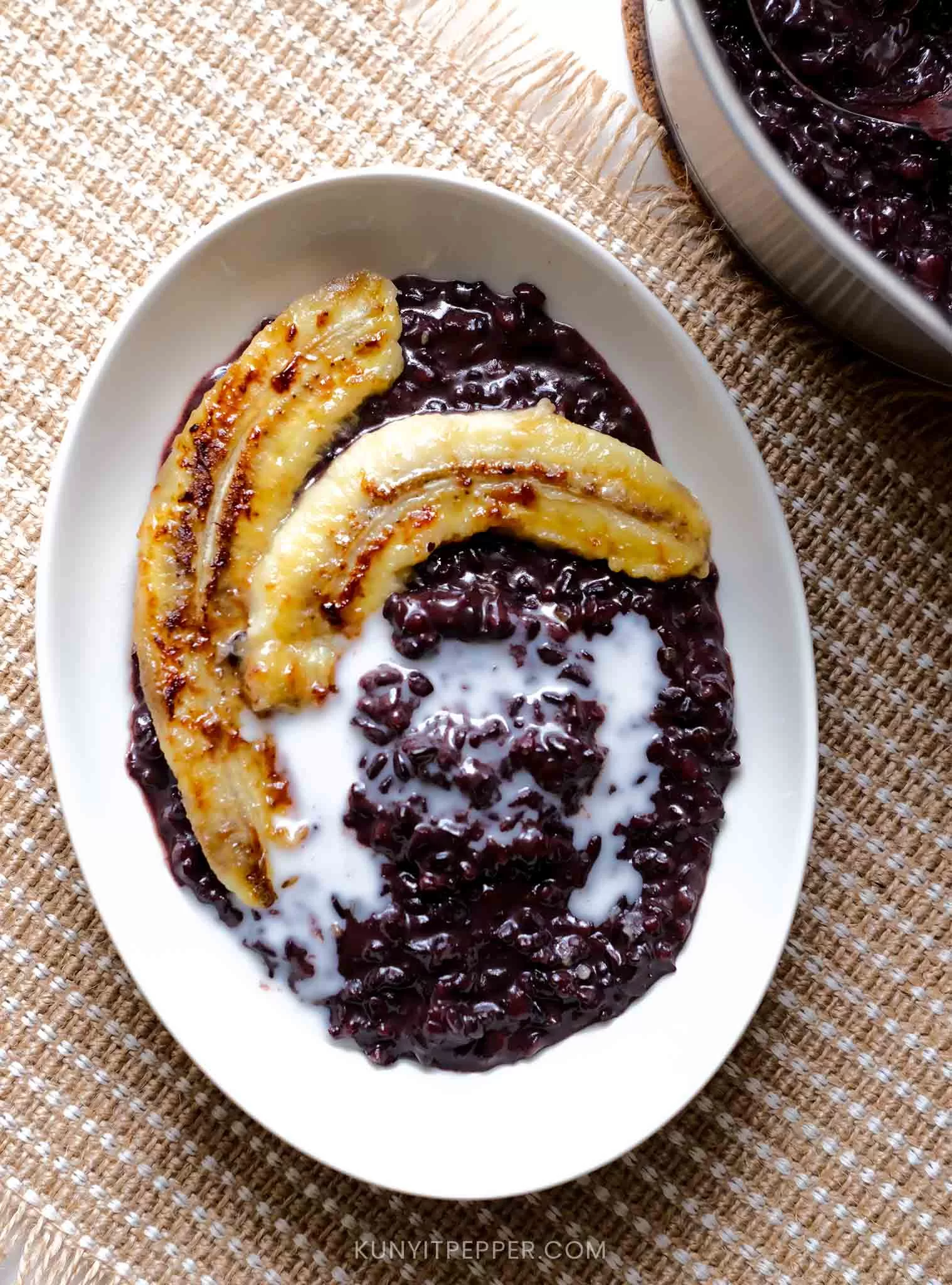
Other Multigrain Rice Recipes You Might Like
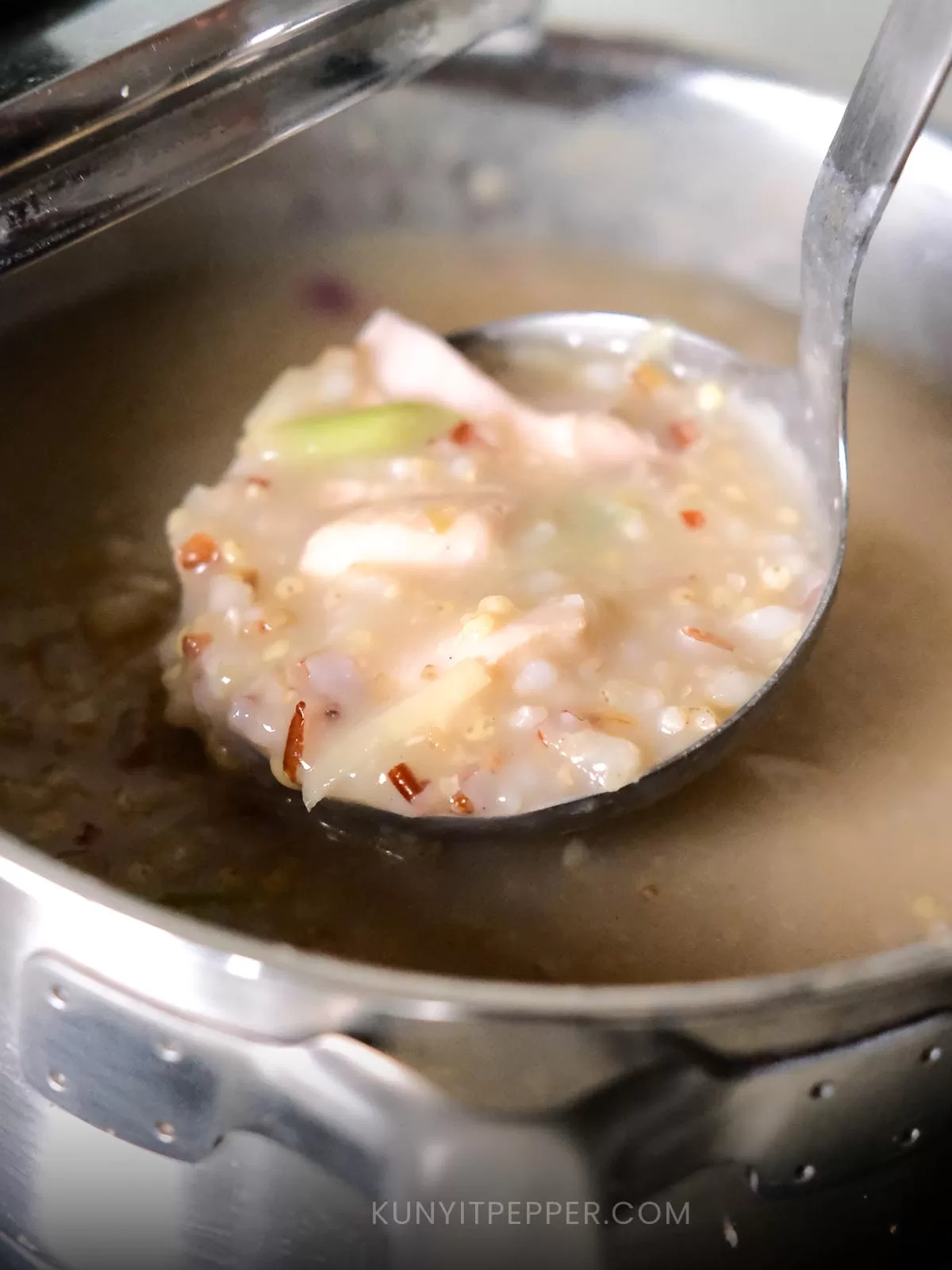
Sweet Grains Recipe To Try

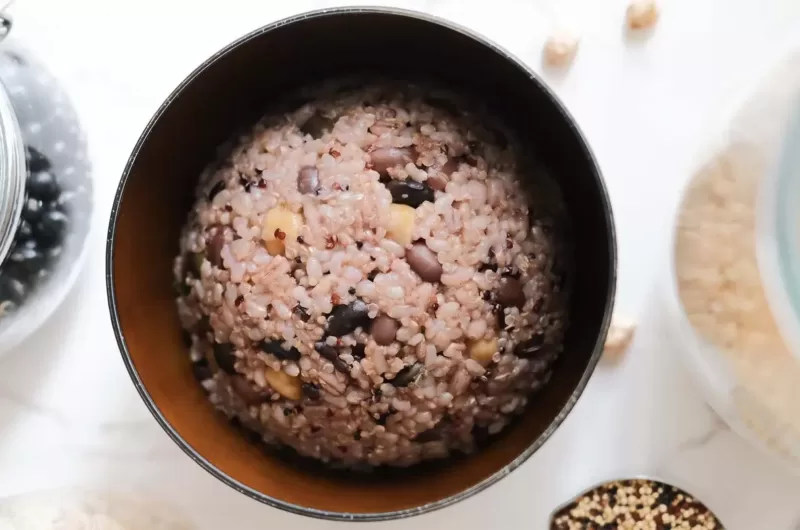
Korean multigrain rice in a rice cooker – Japgokbap
Japgokbap is a traditional Korean rice that mixes rice, whole grains, and legumes, cooked together in 1 pot for extra nutrition, texture, and flavor.
5
pax12
hours1
hour270
kcal13
hoursIngredients
- Legumes
1 heaped tbsp Adzuki beans
1 heaped tbsp Black beans
1 heaped tbsp Chickpeas
- Grains
1 rice cooker cup Short-grain brown rice
1 tbsp Black rice
2 tbsp Pearl barley (Amaranth or oat for gluten-free option)
2 tbsp Foxtail millet
2 tbsp Tri-color quinoa
- Water and salt
3 and 1/2 rice cooker cups Water
1/2 tsp Salt (optional)
- See the how-to image above
Directions
- Soak the legumes in water overnight for 12 hours, making sure they sink to the bottom. (Explore options if you’d like to cook it on the same day above)
- The next day, an hour before the beans are ready, mix all the grains and rice in a bowl or rice cooker pot, rinse until the water runs clear, and leave them to soak for an hour.
- Drain the water from the mixed grains and beans, rinse, and transfer them to the rice cooker pot.
- Add water and salt, and cook according to your preferred setting.
I- Use a manual setting – Set to cook on the normal rice setting for 1 hour.
II- Use brown rice setting – if you’re using a multifunction rice cooker like mine.
III- Use regular rice setting if you’re using a basic rice cooker, but consider cooking for 2 rounds.
Rice cooker (the closest model to what I use in this recipe)
- Zojirushi Multifunction Rice CookerCheck on Amazon
Recipe Video
Nutrition Facts
- Serving Size: 180
- Total number of serves: 5
- Calories: 270kcal
- Fat: 0g
- Cholesterol: 0mg
- Sodium: 230mg
- Carbohydrates: 54g
- Fiber: 6g
- Sugar: 1g
- Protein: 7g
- Calcium: 50mg
- Iron: 2.1mg
- Vitamin E: 0.3mg
- Thiamin: 0.2mg
- Niacin: 2.7mg
- Vitamin B6: 0.3mg
- Folate: 60mg
- Zinc: 1.8mg
- Copper: 0.3mg
- Manganese: 2mg
🥣 Did you try this recipe? Let me know your thoughts in the comments below.





One Response
I tried this recipe and it turned out great! Thanks!